

In present day program advancement, databases control nearly each application. At the center of database communication are SQL Queries, which recover, channel, and control data proficiently. In any case, when inquiries are ineffectively organized, applications gotten to be moderate and inert. Learning how to plan proficient database commands guarantees way better speed, lower server stack, and progressed client fulfillment. Appropriate optimization methods offer assistance designers keep up versatile frameworks that perform reliably beneath overwhelming activity conditions.

1. Shrewd Ordering for SQL Queries
Indexes act like a guide interior a database, permitting information to be found rapidly without checking whole tables. Making records on columns as often as possible utilized in WHERE, Connect, and Arrange BY clauses can essentially upgrade execution. In any case, over the top ordering increments capacity necessities and moderates down Embed, Overhaul, and Erase operations. Engineers ought to carefully analyze which columns genuinely require ordering to keep up a sound adjust between perused proficiency and compose performance.
2. Maintain a strategic distance from Selecting Superfluous Columns
Using SELECT * may appear helpful, but it recovers all columns from a table whether they are required or not. This increments memory utilization, handling time, and arrange activity. Instep, indicate as it were the required columns to diminish overhead. By restricting information recovery to pertinent areas, questions execute quicker and frameworks devour less assets. Cleaner and more exact explanations too move forward meaningfulness and long-term maintainability.
3. Decrease Complex Subqueries
Subqueries can some of the time moderate execution, especially when they return expansive result sets. Instep of profoundly settled inquiries, consider revamping rationale utilizing joins or brief tables. Database motors frequently optimize joins more viably than subqueries. Rearranging complex articulations makes strides execution speed and makes investigating simpler. Clear and organized inquiry plan guarantees that database operations stay proficient indeed as information volume proceeds to develop over time.

4. Effective Sorting in SQL Queries
Sorting and gathering information require extra computation, particularly when taking care of expansive datasets. When utilizing Gather BY or Arrange BY clauses, guarantee significant columns are recorded. Maintain a strategic distance from sorting pointless columns or applying gathering when not basic. Decreasing the number of prepared lines brings down execution time altogether. Keen plan choices avoid execution bottlenecks and keep information recovery operations smooth indeed amid crest application usage.
5. Normalize Database Structure
Database normalization decreases excess and moves forward by and large judgment. A well-organized construction guarantees that connections between tables stay clear and proficient. In spite of the fact that denormalization may advantage particular detailing cases, a appropriately normalized plan more often than not comes about in way better long-term execution. Organized information anticipates duplication and diminishes irregularities. Great plan choices at the construction level make a solid establishment for maintainable execution improvements.
6. Analyze Execution Plans
Most database frameworks give devices that show execution plans for questions. These plans uncover how the database motor forms demands and highlight potential bottlenecks. Investigating execution subtle elements makes a difference distinguish full table filters, lost records, or wasteful joins. By carefully considering these experiences, engineers can alter structures and make strides reaction time. Nonstop checking guarantees the framework adjusts successfully to changing workloads.
7. Optimize Joins in SQL Queries
Joins are fundamental in social databases but can be resource-intensive when utilized despicably. Continuously connect tables utilizing recorded columns to make strides effectiveness. Lean toward Inward Connect when conceivable, since it forms less lines than external joins. Moreover, channel information some time recently performing joins to diminish the result set estimate. Effective connect procedures altogether diminish handling time and upgrade generally database responsiveness.
8. Utilize WHERE Clauses Carefully
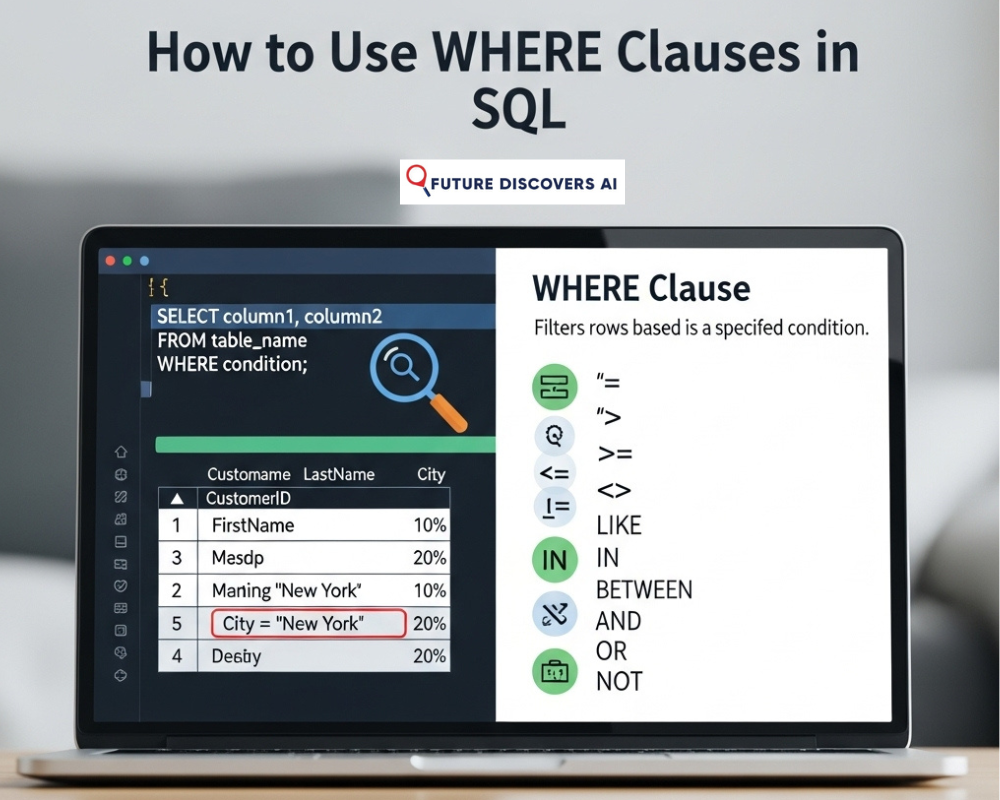
Filtering records with WHERE clauses is basic for execution. Guarantee sifted columns are ordered to dodge checking whole tables. Maintain a strategic distance from applying capacities specifically to recorded columns since it can anticipate file utilization. Composing clean conditions decreases pointless information handling. Exact sifting minimizes framework stack and guarantees that inquiries return comes about rapidly, indeed when managing with expansive volumes of put away information.
9. EXISTS Instep of IN
When checking whether a record exists inside another result set, EXISTS regularly performs way better than IN. The EXISTS clause stops preparing as before long as it finds a coordinate, whereas IN assesses all returned columns some time recently choosing. For expansive datasets, this contrast gets to be noteworthy. Choosing productive comparison strategies decreases computational exertion and makes a difference keep up steady execution in requesting database environments.
10. Maintain a strategic distance from Wildcard Abuse in SQL Queries
Using wildcards in LIKE articulations can cause full table filters, especially when the wildcard shows up at the starting of the design. This anticipates file utilization and moderates recovery. At whatever point conceivable, plan look designs that permit ordering. Executing full-text ordering is another commonsense arrangement for text-heavy applications. Mindful look procedures guarantee productive information recovery without overpowering framework resources.
11. Clump Database Operations
Executing different little inquiries independently increments arrange overhead and association costs. Instep, gather related operations inside exchanges or clusters. This approach decreases communication delays between the application and database server. Bunching moreover moves forward consistency and unwavering quality amid complex operations. Proficient exchange administration guarantees that frameworks perform easily, especially beneath high-traffic conditions.
12. Standard Support Makes strides SQL Queries
Routine upkeep assignments such as overhauling insights, modifying divided files, and cleaning obsolete records keep databases productive. Exact measurements permit the optimizer to select superior execution procedures. Without upkeep, execution continuously decreases as information develops. Planned optimization guarantees that SQL Queries proceed to convey dependable speed and steadiness over expanded periods of operation.
13. Segment Expansive Tables
Large tables can altogether moderate down information recovery forms. Dividing separates information into littler, reasonable portions based on characterized criteria. This decreases the sum of filtered information amid execution and progresses parallel handling. Apportioning is especially useful for enterprise-level frameworks taking care of millions of records. Organized information division upgrades execution without modifying application logic.
14. Select Fitting Information Types
Selecting rectify information sorts straightforwardly impacts capacity proficiency and recovery speed. Littler information sorts devour less disk space and memory, moving forward by and large execution. For case, utilizing INT instep of bigger numeric sorts when conceivable preserves assets. Exact information definitions decrease superfluous overhead and permit frameworks to work more effectively, particularly when handling expansive datasets repeatedly.
15. Use Caching for SQL Queries
Caching as often as possible gotten to comes about diminishes rehashed database handling. Instep of executing indistinguishable SQL Inquiries over and over, store commonly asked information in in-memory frameworks such as Redis or Memcached. Caching minimizes stack on database servers and essentially makes strides reaction time. For high-traffic applications, combining appropriate ordering, organized plan, and caching makes a versatile and responsive database environment.
Conclusion
Optimizing database execution requires reliable observing, mindful plan, and vital changes. By applying these procedures, engineers can guarantee SQL Queries run effectively and dependably. Each framework has special necessities, so nonstop testing and alteration are fundamental. With cautious arranging and standard support, databases stay quick, adaptable, and able of supporting cutting edge application requests without compromising soundness or client encounter.