
The Brainstorming Techniques are used for generating ideas and solving problems. It enables both people and groups to investigate options, ignite creativity, and come up with original solutions. However, not all brainstorming sessions function in the same manner. Using structured approaches that encourage participation and innovation can help you maximize the effectiveness of your brainstorming sessions.
Introduction:
When it comes to solving problems, ingenuity and imagination are crucial. A key component of this approach is brainstorming, a method created to produce ideas and solutions through organized, group brainstorming sessions. Powerful brainstorming techniques can be invaluable whether you’re tackling a difficult business challenge, developing a new product, or seeking creative solutions to everyday problems.
We’ll look at ten effective brainstorming methods in this blog post that can help you solve problems more effectively. Each method provides a distinct framework to encourage creative thinking and provide workable answers, from mind mapping and reverse thinking to the Six Thinking Hats and SWOT analysis.

By understanding and applying these techniques, you can transform brainstorming sessions into dynamic hubs of creativity, collaboration, and innovation. Working alone or in a group, these techniques will enable you to approach issues from several perspectives, question presumptions, and find creative solutions that motivate success.
Brainstorming techniques:
The following effective brainstorm techniques will boost your efforts at problem-solving:
1. Mind Mapping
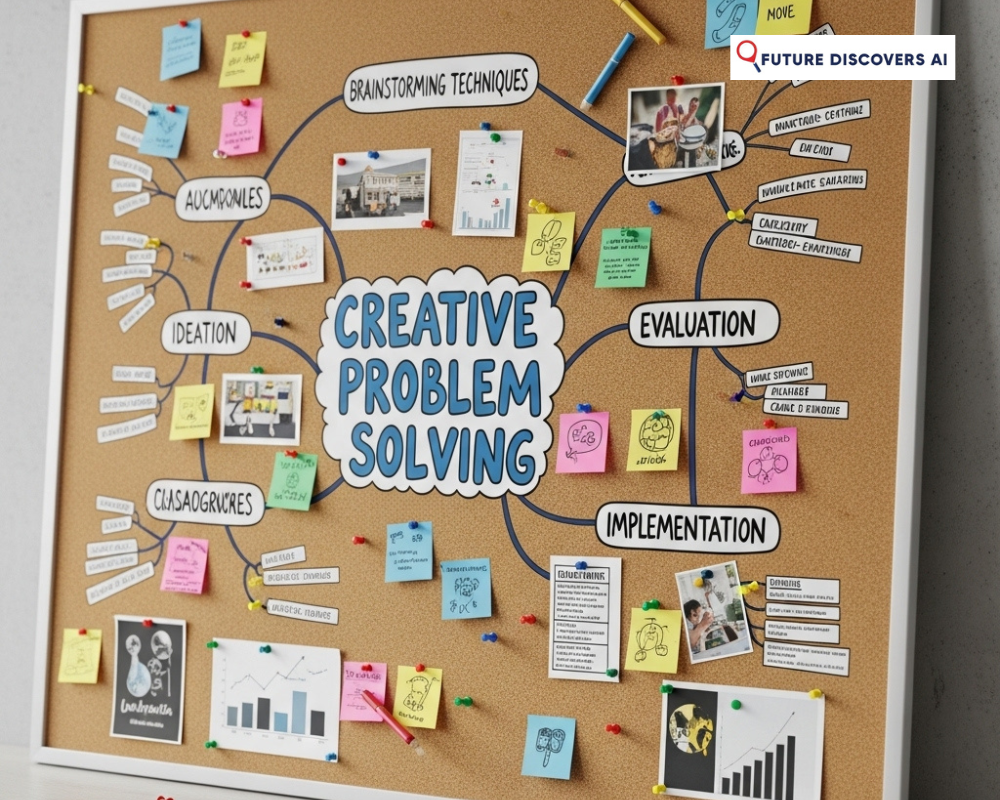
A visual method called mind mapping can be used to arrange ideas and thoughts around a main topic. Start with a main idea or problem statement, then expand on it with further concepts, linkages, and possible fixes. This method promotes nonlinear thinking and makes connections between many components visible, allowing for more in-depth investigation and creative expression.
2. Reverse thinking
Inverse Contemplation Inversion, another name for reverse thinking, is turning the issue statement upside down. ChatGPT said:
Instead of asking how to solve a problem, focus on questions that explore how to create or intensify it. This method pushes boundaries and invites other viewpoints, which frequently result in creative solutions that weren’t initially thought of.
3. Brainwriting sessions
Mental handwriting Individual brainstorming sessions are called “brainwriting sessions,” in which participants jot down their thoughts on index cards or sticky notes. The group shares and discusses ideas after a predetermined amount of time. Social pressure is lessened, simultaneous idea development is possible, and quieter team members are given an equal chance to contribute thanks to this technique.
4. SWOT analysis
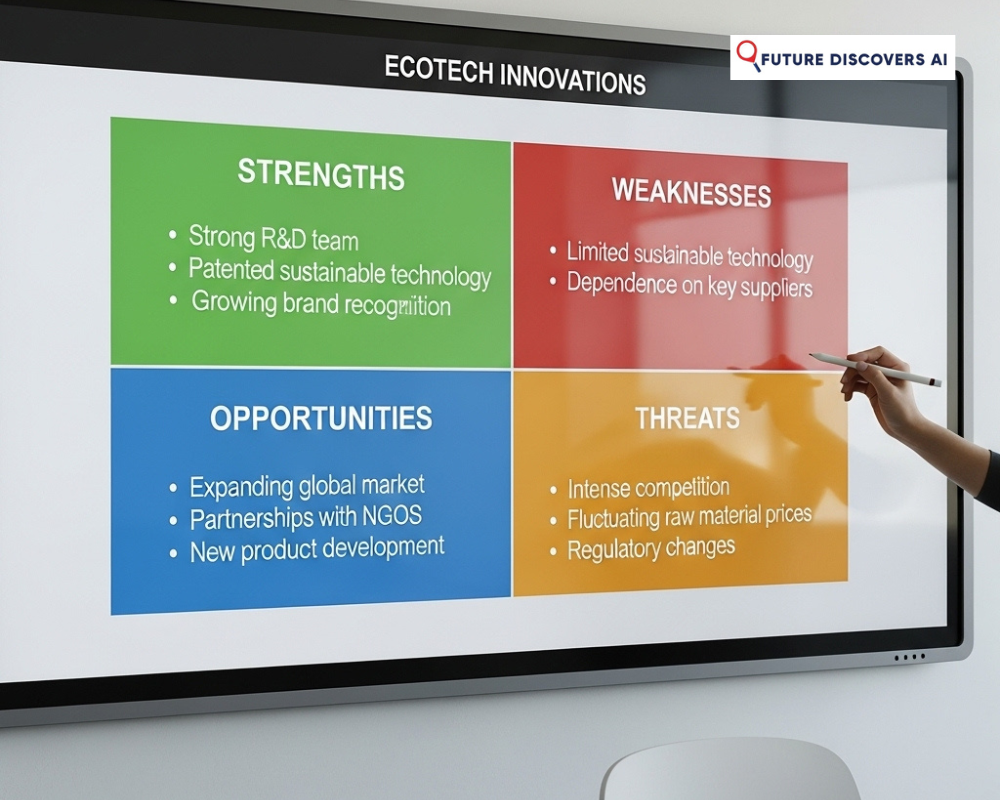
The organized method of SWOT (Strengths, Weaknesses, Opportunities, and Threats) analysis is applied in strategic planning. When using SWOT analysis for brainstorming, one must identify the problem or idea’s exterior possibilities and threats in addition to its internal strengths and weaknesses. Teams can develop strategic paths for action and comprehend the larger context of their problem-solving efforts with the aid of this strategy.
5. role-storming session
Storming the role Taking on various personas or roles during a role-storming session allows one to develop ideas from a variety of perspectives. In order to relate to the issue at hand, participants put themselves in the shoes of various stakeholders, historical individuals, or even imaginary characters. This approach fosters empathy, creativity, and unconventional thinking by encouraging consideration of diverse perspectives.
6. The Six Thinking Caps
The Six Thinking Hats method, created by Edward de Bono, links various colored “hats” to distinct ways of thinking: white represents facts and information, red represents emotions and intuition, black represents caution and critical judgment, yellow represents positivity and advantages, green represents creativity and fresh ideas, and blue represents process control and organization. Through a methodical rotation of these hats, teams can investigate an issue from several perspectives and guarantee thorough examination of all facets.
7. The Disney Method
This method, which bears Walt Disney’s name, is assuming three distinct personas: the dreamer, the realist, and the critic. The realist assesses viability and practicality; the dreamer creates ideas without limitations; and the critic spots potential problems and hazards. ChatGPT said:
By assigning these roles, teams can effectively generate, refine, and validate ideas in a structured manner.
8. Irrational Stimulation
To spark creativity, random stimulus techniques involve adding unexpected or unrelated elements to the brainstorming process. This could apply to things, pictures, phrases, or even unrelated issues. Through compelling linkages between seemingly unrelated things, participants are prompted to look beyond their typical frameworks and produce original answers.
9. SCAMPER Method
The SCAMPER Method Substitute, Combine, Adapt, Modify, Put to another use, Eliminate, and Reverse is what the acronym SCAMPER stands for. By using these various acts, people are encouraged to creatively alter pre-existing ideas or goods. Every letter stands for a distinct method of approaching problem-solving, encouraging creative thought and idea production.
10. Using storyboarding
A common visual tool in design and cinematography, storyboarding can also be applied to problem-solving. A series of visual depictions (sketches, diagrams, or even written scenarios) of the existing state of affairs, possible fixes, and intended results are produced by the participants. By using storyboarding, teams can more effectively visualize a problem and explore multiple storylines or possible paths to a solution.
Conclusion:
In order to be truly effective, brainstorming must not only produce ideas but also cultivate a collaborative atmosphere that values diversity of thought and allows creativity to flourish. You can improve your problem-solving skills and find creative solutions by applying these ten effective strategies: mind mapping, reverse thinking, brainwriting, SCAMPER, role-scanning, Six Thinking Hats, the Walt Disney approach, random stimulation, SWOT analysis, and storyboarding. Try these methods out, modify them to suit the demands of your group, and observe how your brainstorming sessions produce game-changing concepts and fruitful results.